Training Day serves as the inaugural day of the annual ECB Simulation Conference for university students, where distinguished representatives from institutions, businesses, and academia share their knowledge and experiences with the participants.
The Training Day for the 9th Conference took place at the Bank of Greece on November 21, 2024.
The key themes of the Conference were:
The 9th Conference was made possible thanks to the invaluable support of the Bank of Greece, the Hellenic Bank Association, Dialectica, Piraeus Bank, Bernitsas Law, and the Athens University of Economics and Business.
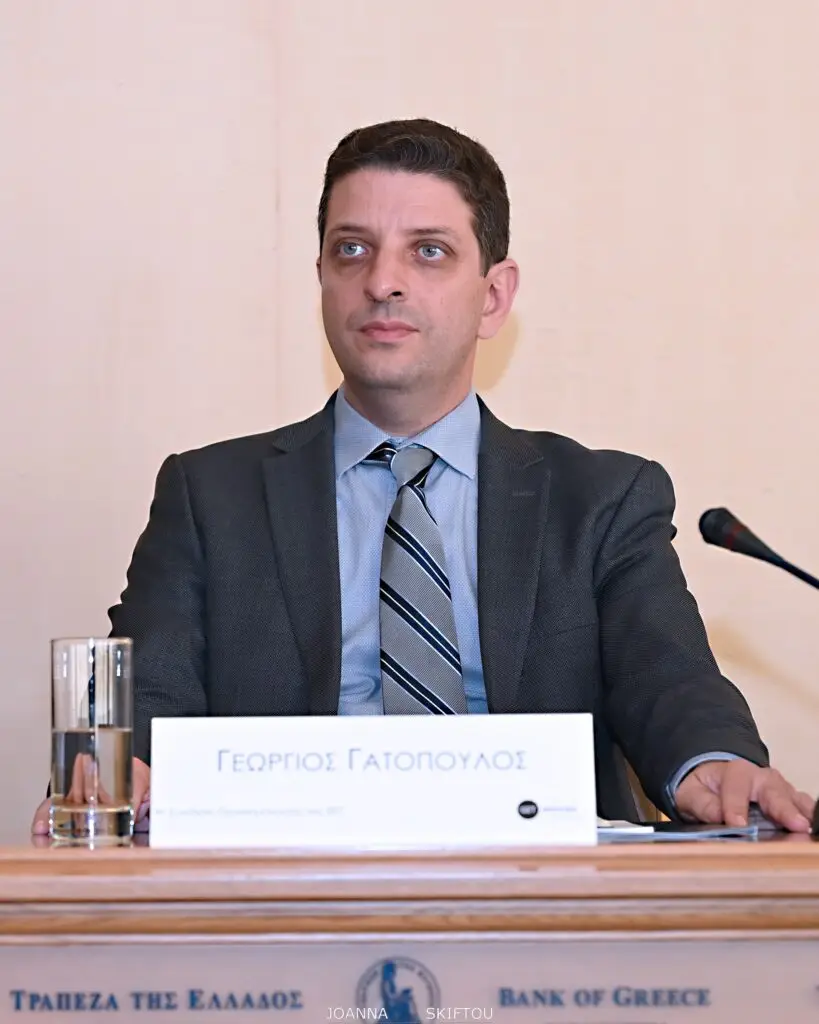
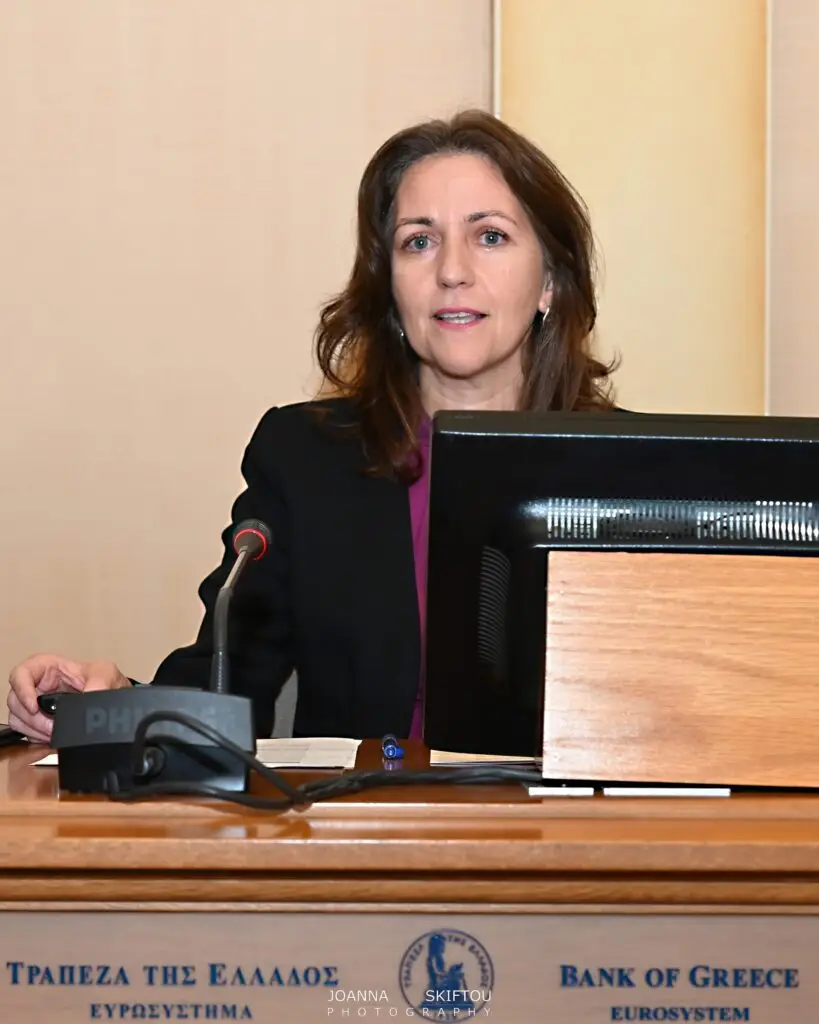
Here, we highlight the positions of the speakers during the welcoming speeches. We are greatly honoured to have speakers such as Ms. Ifigeneia Skotida, Deputy Director, Economic Analysis & Research Department, Bank of Greece, Mr. Nikos Magginas, Chief Economist, Head of Economic Analysis Department, National Bank of Greece, and Mr. Georgios Gatopoulos, Head of International Macroeconomics and Finance Unit, IOBE.
Opening the second panel, Ms. Ifigeneia Skotida presented the ECB’s monetary policy strategy to maintain a symmetric medium-term inflation target of 2%. The medium-term approach allows the ECB to avoid overreacting to short-term inflation shocks while accounting for transmission lags.
The strategy relies on numerous and diverse available tools—policy rates, asset purchase programs, and forward guidance—adjusted to economic conditions. She emphasized the importance of transparency and communication to ensure public and market understanding of ECB decisions.
Following the pandemic and the war in Ukraine, the ECB raised interest rates by a total of 450 basis points to contain inflation without sharply constraining economic activity, aiming for a soft landing. The decline of inflation to 2.5% by mid-2024 confirms the effectiveness of the monetary policy, with forecasts indicating that inflation returns to target in the coming years. ECB lowered interest rates to less restrictive levels, where they remain to this day.
She concluded by noting that uncertainty persists due to geopolitical tensions, tariffs, and demographic challenges.
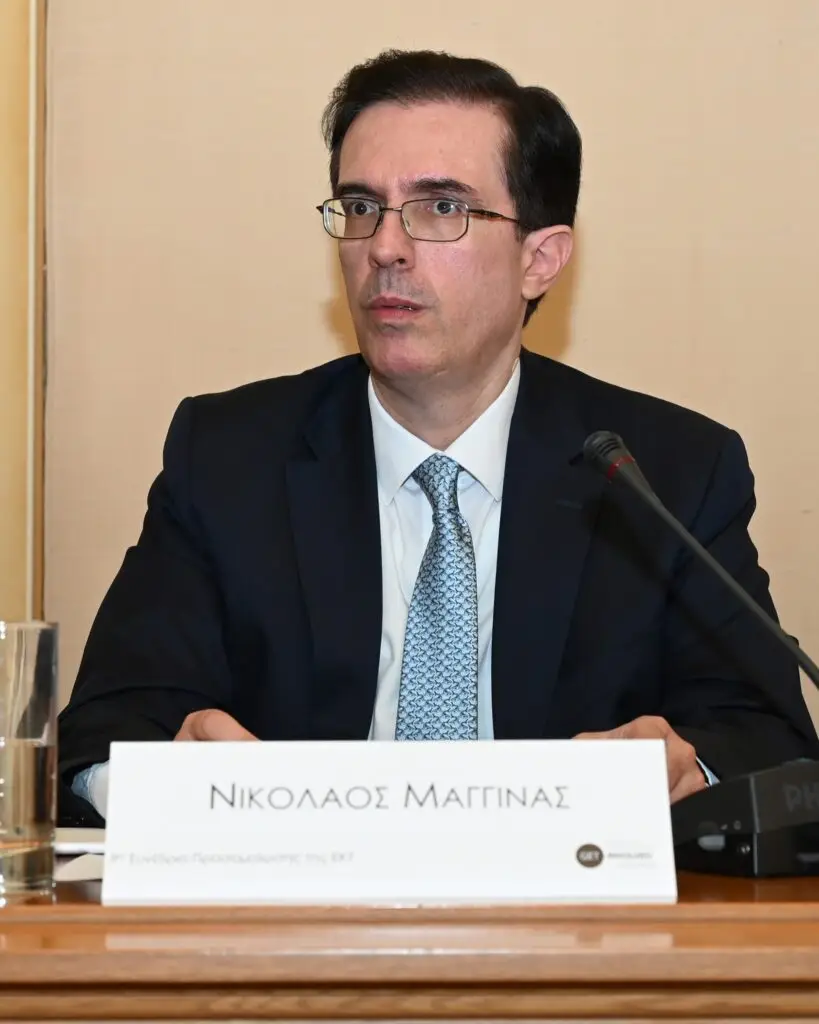
Continuing the speeches, Mr. Nikolaos Magginas highlighted the crucial role of the ECB and central banks in responding to the disruptions of the last decade. He argued that the ECB reacted fastest, using tools such as quantitative easing—an innovation that provided liquidity and stabilized markets, especially for Greece.
He explained that before the crisis, the global economy benefited from low production costs, stable energy prices, and restructured supply chains, creating a prolonged period of stability that allowed monetary policy to operate almost on “autopilot.” Recent crises, however, triggered supply shocks, supply-chain disruptions, and a shift from goods to services inflation, with uneven effects across income groups.
Today, he noted, keeping long-term inflation expectations anchored near 2% is essential for effective transmission, reinforcing the ECB’s credibility. He closed by highlighting emerging challenges: climate change, the green transition, artificial intelligence, and the increasing complexity of tracking productivity- and price-related variables.
Closing the panel, Mr. Georgios Gatopoulos presented current trends in the international and Greek economy. He stressed that 2025 is marked by heightened uncertainty, a new wave of U.S. protectionism, and slowing growth in Europe. The global economy is shifting to a new equilibrium characterized by higher tariffs and increased public debt.
He noted that Europe lags in productivity, with the average European producing output roughly 30% lower than the average American. The continent also faces structural challenges: an aging population, defense needs, and an investment gap. Yet, the Eurozone periphery performs better than the core, with Greece steadily reducing public debt and expanding its export orientation.
For Greece, he emphasized that the economy is gradually converging with Europe, driven by export growth, though the investment ratio remains comparatively low. Greece must boost productivity, maintain openness, and safeguard macroeconomic stability.
Mr. Gatopoulos concluded by stating that Europe stands at a critical crossroads and must prioritize effectively while leveraging private capital through partnerships, as fragmented capital markets increase financing costs.