
Training Day serves as the inaugural day of the annual ECB Simulation Conference for university students, where distinguished representatives from institutions, businesses, and academia share their knowledge and experiences with the participants.
The Training Day for the 9th Conference took place at the Bank of Greece on November 21, 2024.
The key themes of the Conference were:
The 9th Conference was made possible thanks to the invaluable support of the Bank of Greece, the Hellenic Bank Association, Dialectica, Piraeus Bank, Bernitsas Law, and the Athens University of Economics and Business.
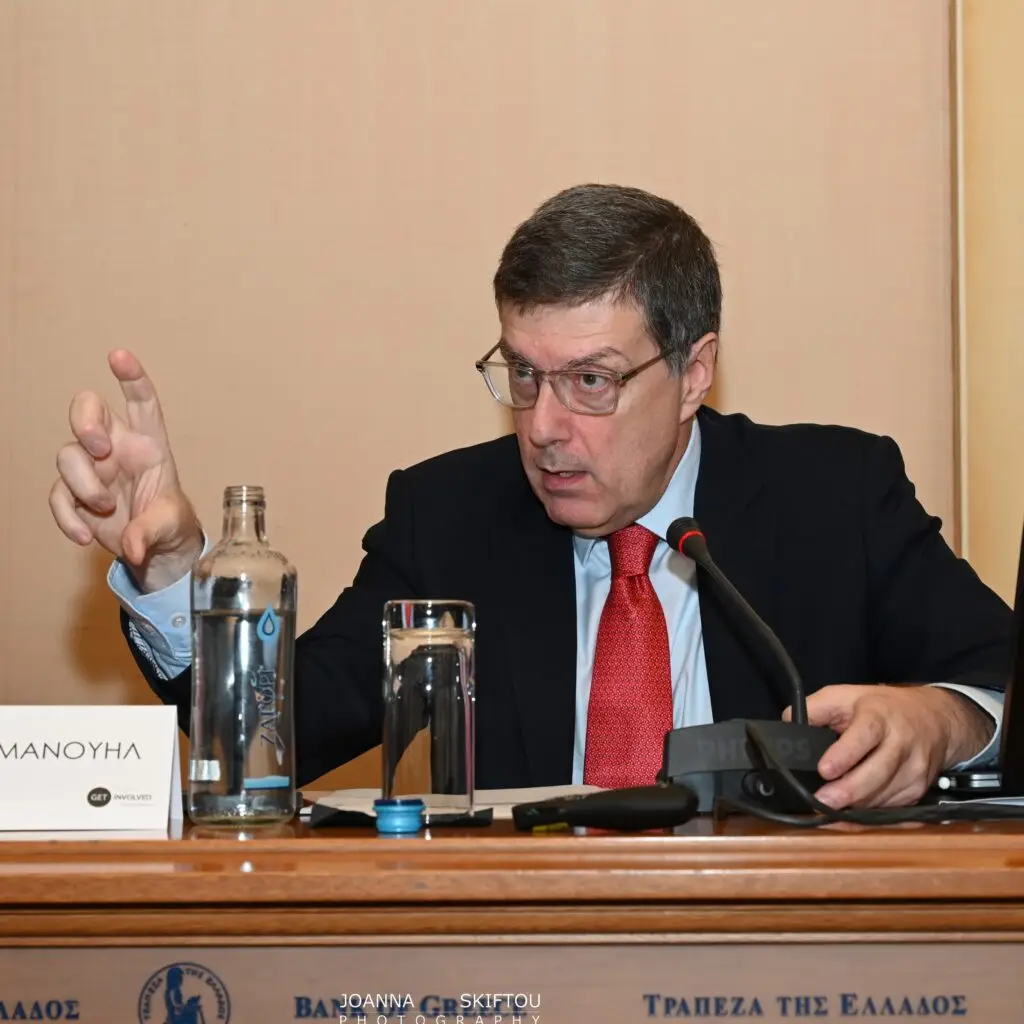
Here, we highlight the positions of the speakers during the welcoming speeches. We are greatly honoured to have speakers such as Mr. Christos Hadjiemmanuil, Professor, University of Piraeus, Visiting Professor, London School of Economics & Member of the Monetary Policy Council, Bank of Greece, and Mr. Emmanouil Perakis, Associate Professor of European Union Law, National and Kapodistrian University of Athens.
The first discussion panel opened with Mr. Christos Hadjiemmanuil, who presented the institutional foundations of the Economic and Monetary Union. He stressed that macroeconomic policy rests on two pillars: monetary and fiscal policy. The initial ambition for full convergence in both areas—traced back to the Werner Report—proved unrealistic, as states would not accept such a loss of sovereignty.
The Maastricht Treaty established a framework in which the ECB enjoys a unique level of independence, constitutionally safeguarded at the Union level. Its mandate remains narrow—price stability—justifying the strict limits on intervention and its high degree of autonomy. However, the sovereign debt crisis exposed functional asymmetries: the ECB is prohibited from financing governments, yet was called upon to act as a guarantor of fiscal stability through various initiatives.
Mr. Hadjiemmanuil concluded by noting that despite progress, coordination between a single monetary policy and national fiscal policies remains imperfect. The Eurozone still operates through intergovernmental cooperation, often burdened by mistrust and divergent national priorities.
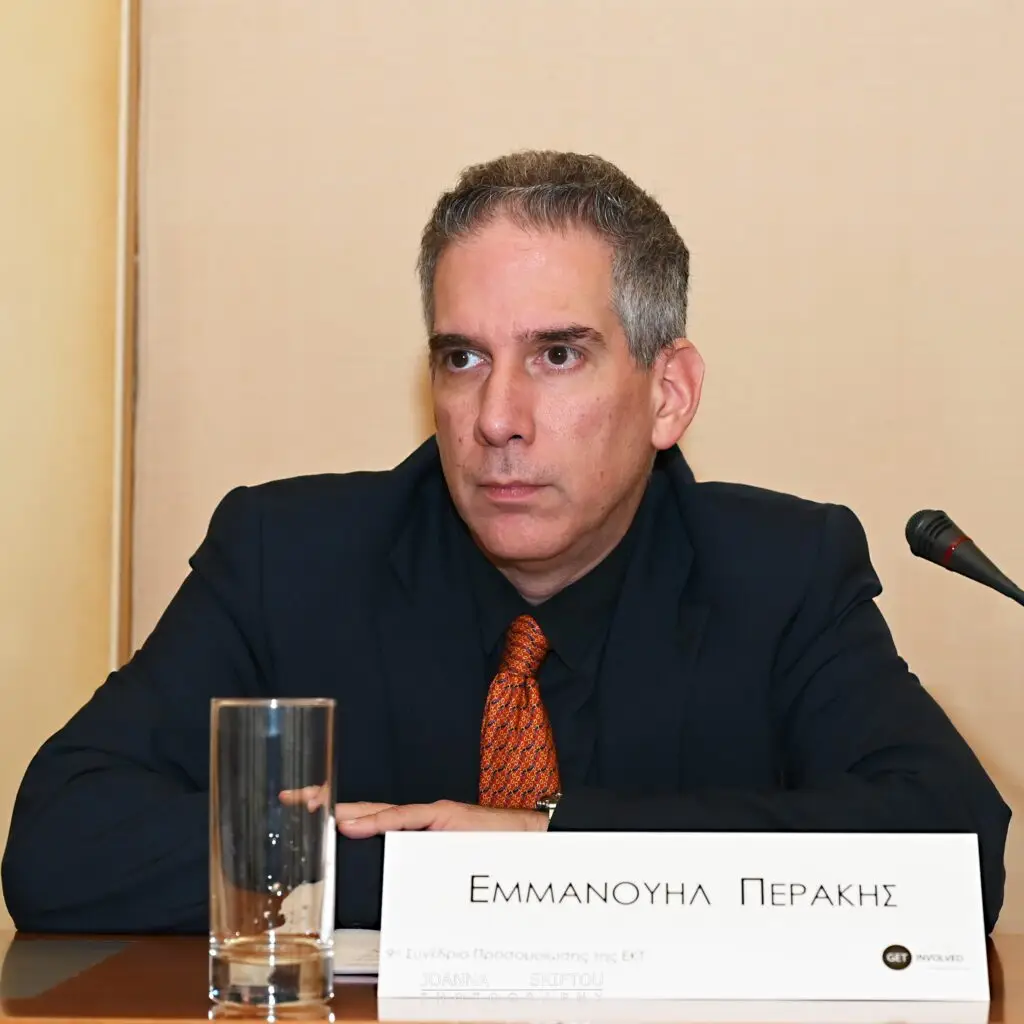
Mr. Emmanouil Perakis, continued the discussion by highlighting the financial crisis as a turning point for the Eurozone, revealing the institutional weaknesses of Maastricht. EMU’s architecture had separated monetary from fiscal policy and relied mainly on crisis-prevention mechanisms. When the crisis hit, member states were caught off-guard and had to develop new supranational tools.
This period led to the creation of the European Stability Mechanism (ESM), enhanced surveillance, and the 6-pack and 2-pack reforms—Europe’s first systematic crisis-management tools. The Court of Justice of the EU also played a key role through creative interpretations that allowed the ECB to act at the fringes of its mandate, though these decisions remain debated. With his “whatever it takes” mandate, Mario Draghi turned the ECB into an active defender of economic stability.
Mr. Perakis closed by highlighting the balance between independence and accountability: the ECB’s independence is enshrined in Article 130 TFEU, but it is not unlimited. Accountability is essential for legitimacy, making the proper equilibrium between the two principles indispensable.