
On 18 April 2024, the educational seminar”Sustainable Future III: Powering the Future of Energy, Supply Chain and Finance” was held at the National Hellenic Research Foundation. The event aimed to help the audience understand the current reality and existing challenges shaped by ESG drivers in the energy, supply chain, and finance sectors. In particular, it focused on the following topics:
The event was graced by the presence of 12 eminent representatives from academia, institutions and the market, and was attended by an audience of 160 participants from a diverse scientific background. Below is a summary of the main points of the presentations of the speeches of the event:
The Opening Remarks started with Mr. Panagiotis Chabesis, Head of the Sustainability Unit at the Hellenic Banking Association (HBA). His speech began by noting that climate change is a risk multiplier that affects economic activities. Banking institutions, having two roles, as corporate entities and financers of the economy, are at the center of the effort to address climate change as they are accountable not only for their activities and results but also for the activities of the companies, they are financing. Continuing his presentation, Mr. Chabesis acknowledged the need for synergy of the Public and Banking sectors in financing the necessary investments for achieving net zero. He also stressed the high regulatory demands that the financial system is subject to, recognizing that this has contributed to keeping the banking institutions “healthy”.
Concluding his speech, Mr. Chabesis presented the important work of the Hellenic Bank Association on climate change and green transition, such as the publishing of an informational prospectus for companies to better understand the ESG framework, the participation of HBA in the National Council for Circular Economy, the organization of a conference with the topic of Sustainable Financing held in June 2023 and the provision of educational programs for banking executives.
The Opening Remarks were concluded by Mrs. Phoebe Koundouri, Professor at the Athens University of Economics and Business & Technical University of Denmark, President EAERE, Chair of UN SDSN Global Climate Hub, and Director at AE4RIA. In her address, she focused on the transition to sustainability for societal well-being, while also presenting the theoretical framework for the green transition. Specifically, for achieving green and sustainable transformation she highlighted the need to quantify their processes, noting that if we are unable to measure it we cannot manage it. She stressed the need to measure the Sustainable Development Goals (SDGs) and ESG performance- to set specific targets and to find the necessary technological and financial political pathways to achieve them.
Continuing with her address, Mrs. Koundouri highlighted the importance of an interdisciplinary framework of communication and cooperation for Sustainable Development, the interaction of science with institutions and business to educate and guide them on the most appropriate way to implement proposed solutions. Moreover, Mrs. Koundouri presented that the investing portfolios that take into account SDGs and ESG parameters have become the most profitable in the market, but still, she stressed the exclusion of social capital considerations on investments and development strategies. In conclusion, Mr. Koundouri deemed it necessary that education and the acquisition of new skills are crucial to accomplish a sustainable transition.
The keynote speeches started with Mr. Francesco Cometa, Principal in Banking at the European Central Bank (ECB). He began his speech by emphasizing the need to address the impacts of climate change, even though it is not a statutory objective of the ECB, as they could significantly impact the financial stability of the Eurozone. Mr. Cometa noted that the ECB’s primary objective remains price stability while acknowledging the direct relationship between the banking sector on the environment. He characterized climate risk as a new parameter, that has been integrated into the banking landscape, in addition to the “traditional” risk sources, and delved into its economic impact on the macroeconomic level.
He stressed the need to strengthen supervision and foster regulation to prevent and address potential disruptions that are related to climate change and could affect the financial stability of the Monetary Union. He also communicated that banking supervision will continue to utilize all of its tools to guarantee that banking institutions will align with the supervisory requirements.
In addition, Mr. Cometa described how individual climate risks can combine and accumulate within the banking system, creating systemic risks and threatening the stability of the financial system. Therefore, he emphasized the importance of managing climate risks as a strategic priority to safeguard financial institutions and the broader economy. He also recognized the ECB’s role in supporting the green transition and fostering actions to address climate-related challenges and presented the evolving ECB climate strategy from 2015 to 2025.
Finally, Mr. Cometa recognized the challenges in the European legislative framework, the need for supervisors for actions that are based on analytical data, and the need for banking institutions to follow the timeframes that have been set to address climate risks. He underlined the need for the improvement of climate-related stress testing, particularly in enhancing the governance structure, data availability, and modeling techniques. Regarding the youth, he encouraged them to remain active and to search for opportunities that are occurring in the sustainability landscape.

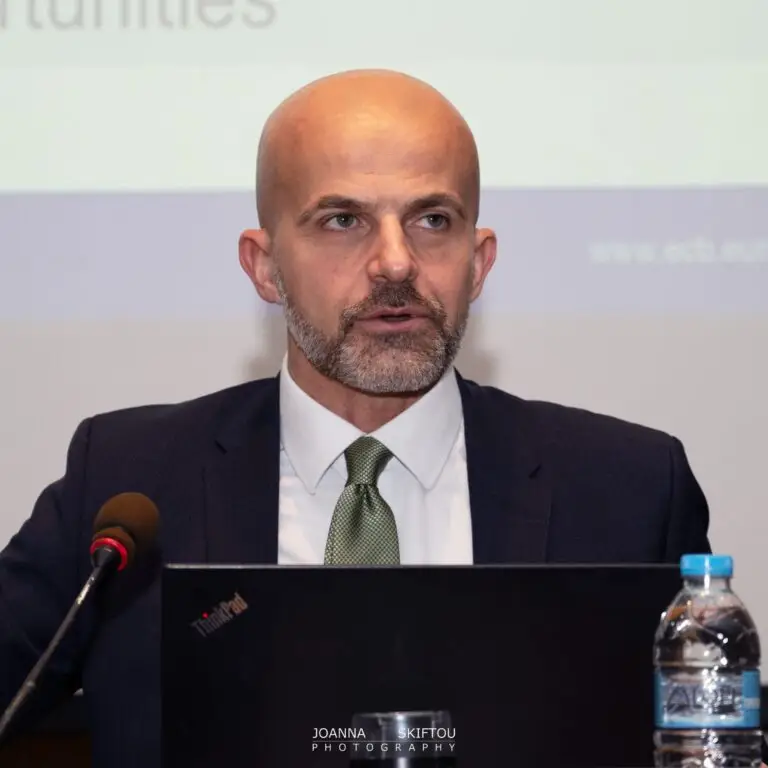
During her speech, Ms. Katerina Paisiou, Sustainable Finance expert at the Bank of Greece (BoG), highlighted that the Bank of Greece was the first among the Central Banks that took action in 2009, to address climate change. With the creation of the Climate Change Impacts Study Committee in 2009, the Bank of Greece began researching the economic, social, and environmental impacts of climate change in Greece and also conducts systematic research on a broad range of sectors. Ms. Paisiou presented the BoG’s sustainability journey, noting key milestones such as its pledge to contribute to achieving the Paris Agreement objectives and the development of the Climate Change and Sustainability Center in 2021.
Ms. Paisiou also highlighted the Bank of Greece’s flagship report on the environmental, economic, and social impacts of climate change in Greece. She reported on the potential significant economic impact of the scenarios of inaction, of moderate action, and of achieving the climate targets. The results reveal the significant risks that countries such as Greece are facing as a result of climate change. The study showed that environmental damage can harm Greek natural resources, leading to lower productivity and higher recovery costs. Using scenario analysis, the report emphasized the urgent need for action to mitigate and adapt to climate change, underlining the high costs of inaction.
Regarding the university students, she noted the developments that are occurring on the banking supervision level as well as on the overall sustainability landscape, understanding which are the necessary skills for the future is an evolving field, and advised them to remain active.
Mr. Avraam C. Gounaris, Senior Independent Director at the National Bank of Greece, in his speech, emphasized education and constant adaptation as crucial responses to the challenges that ESG brings in the global economic environment. He stressed the intense pressure from supervisors and society to comply with ESG standards. Moreover, Mr. Gounaris pointed out the need for horizontal and vertical integration of ESG into banks’ operations, highlighting the importance of constant development of financial products that align with ESG criteria. He recognized the role Board of Directors in the decision-making process and the importance of Governance. The transition to full compliance is challenging but inevitable, banks are obliged to take steps to identify, measure, and address ESG risks that arise. Mr. Gounaris stressed that the adoption of ESG criteria is a global need that goes beyond the banking sector and is relevant to the global community. Concluding, he highlighted the importance of adapting to new data and widespread awareness of the benefits of complying with ESG standards, particularly in a business environment where sustainability has become crucial. Generation Z, he noted is a generation that actively contributes to the paradigm shift and is participating in the challenges of sustainability.
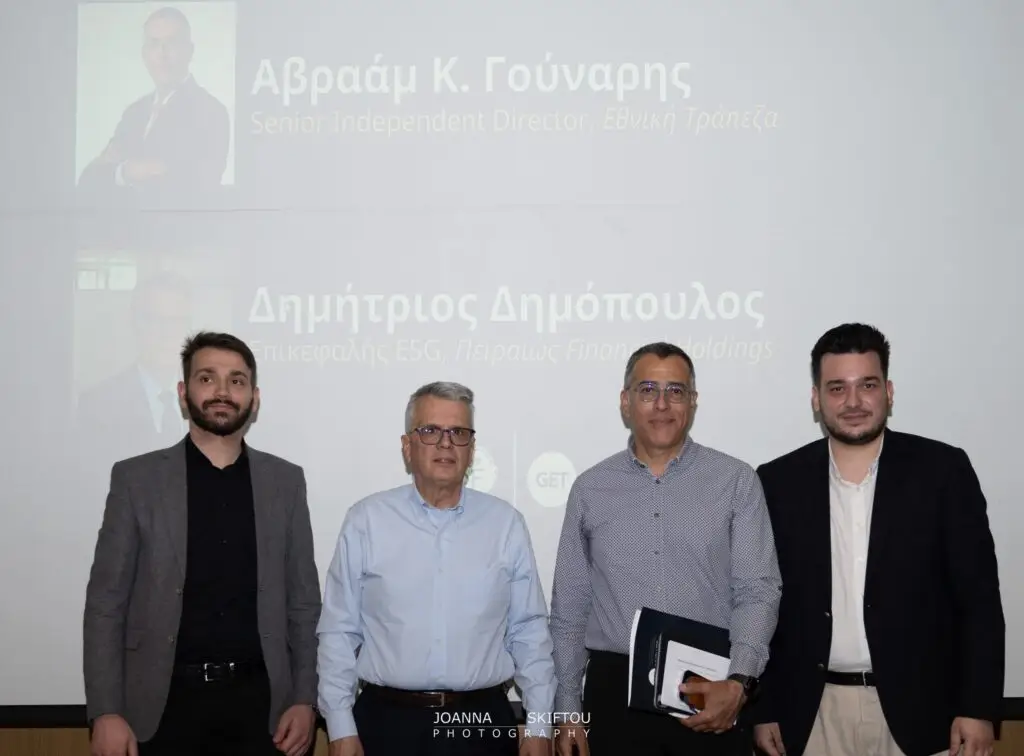
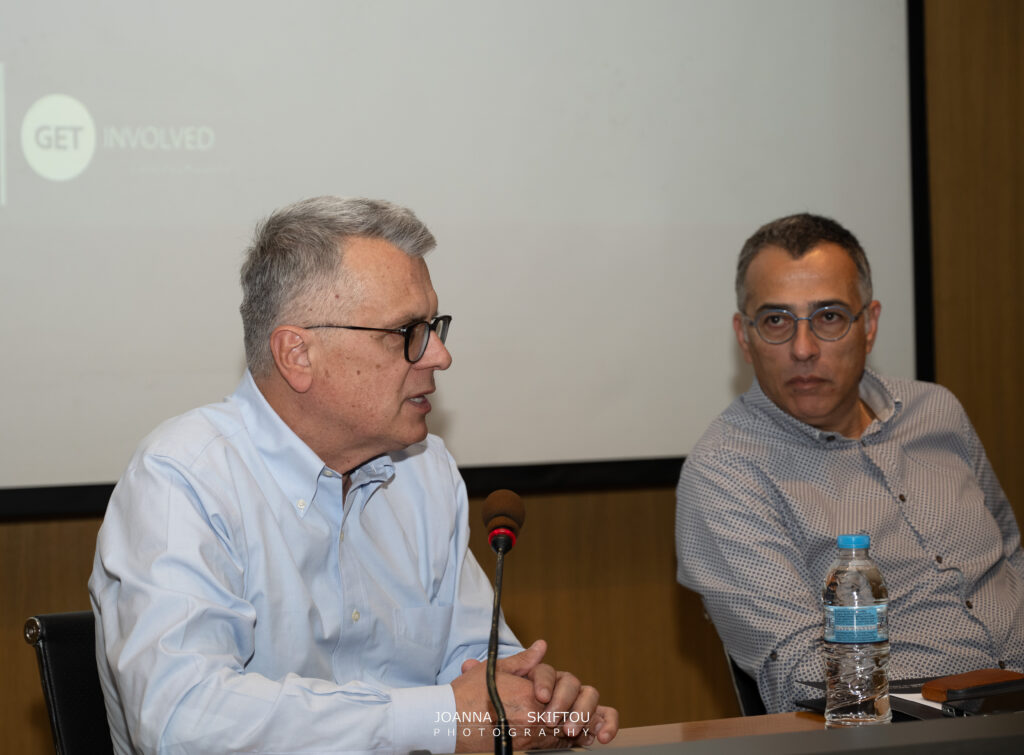
Mr. Dimitrios Dimopoulos, Head of ESG at Piraeus Financial Holdings, highlighted the crucial role that banks play in the development of society and economy, as they finance and offer financial services to both households and enterprises. In a period of intense economic transformation due to the green transition, Mr. Dimopoulos emphasized the need for effective communication between banks and their customers to address challenges and seize opportunities. Mr. Dimopoulos then stated that small and medium-sized enterprises (SMEs) will need to integrate ESG standards and sustainable development principles into their business models. Failure to comply will result in obstacles to accessing financial tools. As a result, banks have developed tools to quantify ESG-related risks to better assess financing risk and make informed decisions, as their customers’ ESG risk also translates into ESG risk for the banks themselves.
In addition, when asked about the financing of the green transition, Mr. Dimopoulos noted that the complexity of ESG issues requires continuous training of bank employees so that they can convey the green transition culture to their customers and support them throughout the process. Finally, he stressed the crucial role that universities need to play in understanding and solving green transition issues by adopting an interdisciplinary approach. Mr. Dimopoulos consulted the youth, about their future careers, to love what they do, and that in the sustainability landscape people with diverse scientific backgrounds can collaborate and partner.
Ms. Elena Athousaki, Chief Sustainability Officer at Motor Oil Company, analyzed the impact of the Corporate Sustainability Reporting Directive (CSRD) legislation on businesses, distinguishing the listed companies. Specifically, while in the past sustainable transformation was associated with Corporate Social Responsibility (CSR), nowadays it is regulated by legislative frameworks and guidelines. The challenge to effective CSRD implementation lies in the associated costs, as each reported data must be thoroughly and annually monitored, similar to financial statements’ procedure. One of the most important benefits of CSRD is the use of a unified disclosure framework, as companies were -until today- required to respond to multiple questionnaires, requesting different data and using different methodologies. The unified framework will allow a clear and fair comparison of the performance of different businesses. Ms. Athousaki expressed the hope that, in the future, investment decisions will be made by considering non-financial information.
Moving on to small and medium enterprises (SMEs), Ms. Athousaki explained that they are required to collect significantly less information, compared to large corporations, and they have to better comprehend the framework under which they operate. This will help them understand the information that they will have to disclose, without the need to use and to commit funds to external consultants.
Concluding her presentation, Ms. Athousaki emphasized on the lack of infrastructure, funding and training in Greece on ESG and Sustainability issues. In particular, she stood on the announcements on sustainability topics and stressed the adding value that can be generated by synergies of the public and private sectors. The effort to green transition should be done in collaboration with governmental decisions and the necessary finding. Europe has set binding targets for the companies and in order for them to be implemented, funds are required. Despite the implementation difficulties, she expressed a commitment to treating these parameters with the same seriousness as the financial statements.
In regards to the youth, she noted that the success of the current Sustainability Officers is to motivate more young professionals to choose the sustainability career path, while stressing that it is a interdisciplinary sector, in which youth from diverse scientific backgrounds can participate, given they invest time and study. She encourages the participants to begin studying the sustainability reports of corporations and to act in gaining the necessary skillsets.

Mr. George Galanis, Sustainable Development Director at MYTILINEOS, highlighted that the CSRD will, for the first time, mandate companies to face the social, ethical, and environmental impacts of their activities. Moving on, he noted that MYTILINEOS has integrated ESG parameters in its business model since 2012. Its approach has four pillars: the governance pillar -which relates to the internal operation of the company-, the strategy pillar, the risk mitigation and the utilization of opportunities, and finally, the policy pillar -which defines the specific goals it has set for itself in terms of sustainability-.
Regarding ESG Raters, Mr. Galanis explained that they will certainly include CSRD or some of its elements in their analysis while also maintaining their own parameters, as they have formed a market with significant economic importance. Mr. Galanis argued that CSRD requirements will fulfill the legislative disclosing expectations, but companies can expect to add further indicators to their reports. The common European framework for disclosures is expected to influence a company’s internal operations, as it will permit more reliable assessments of suppliers and the development of codes of conduct that are aligned with the ESG criteria. Moreover, he characterized listed companies as proxy “ESG Raters” for the smaller enterprises, as having to report on their value chain they will push SMEs to significant improvements.
Mr. Galanis concluded by pointing out that ESG is not synonymous with either climate change or corporate philanthropy. As Greece is the main place of activity of MYTILINEOS, it closely cooperates with its stakeholders, following international best practices under which the stakeholders are actively engaged with the ESG practices, altering the structure of consultation and the decision-making framework.
Regarding the youth, and following the position of Ms. Athousaki, he noted that they have to love what they do and to always think about the future.
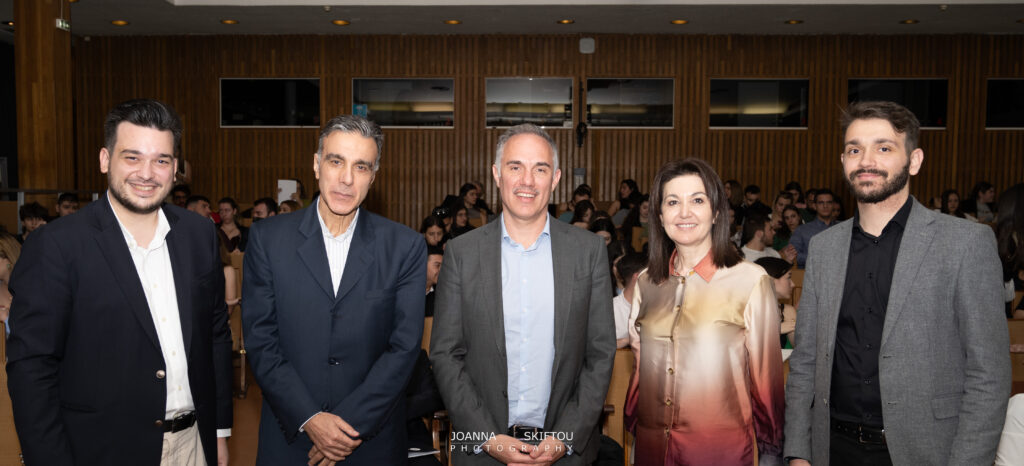
Concluding the second Discussion Panel, Mr. Achilleas Ioakeimidis, Sustainability Director at PPC, focused on the already broad acceptance of ESG as a new and distinct sector of the economy. Specifically, he claimed that we are now in an era where “non-financial data affect a company’s value”. He finds this development positive and points out the critical need for transparency. However, he also stressed the primary need for credible ESG data and a robust data-gathering process. He highlighted that the CSRD creates for the first time a system, where every company has to report and is being assessed, using a predicted and standardized framework, thus securing data accuracy and enabling a fair comparison between different companies.
Moreover, Mr. Ioakeimidis supported that large corporations have already begun their transformation to a more sustainable modus operandi, by defining their goals and clearly determining their strategies. In that context, he analyzed PPC’s strategic plan for green transition. In particular, their target is to intensify their investments in Renewable Energy Sources (RES), so they reach ⅔ of their investments in 2026.
Moreover, he stressed the paradigm shift in the market, as big corporations are developing synergies, even with their competitors, to spearhead green transitioning. In that context, he noted the collaboration of PPC with MYTILINEOS and Motor Oil, to develop projects that focus on green hydrogen in 5 European countries.
He stated to be particularly positive for the future, as he observed a positive change in the mindset of all the stakeholders involved in green transitioning. He also emphasized the need for larger companies, such as PPC, to become role models for the small and medium ones, so they also follow a similar path toward green transformation. Concluding his speech, Mr. Ioakeimidis clarified that sustainability is a transition journey that will take place during the upcoming years and encouraged the youth, who are now joining the job market, to become a part of this journey and contribute to its fulfillment.
Finally, he welcomed the participation of the university students in initiatives such as the Sustainable Future and pointed out that the sustainability departments of the companies, actively invest time in the university students and encouraged them to have an active role. As an example, he informed that students of the Georgetown University of U.S. hold an active discussion with PPC, as they requested to study their data presented in its ESG reports and to assess the corporation on sustainability metrics.
In his speech, Mr. Socrates Moschuris, Professor of Logistics and Industrial Products Management at the Department of Industrial Management and Technology of the University of Piraeus, explained the concept of Logistics and its differentiation from the broader concept of supply chain. Specifically, he stressed that Logistics is essentially a subset of the supply chain, focusing on managing and storage of the flows of various materials, services, and relevant information from the point of origin to the point of consumption.
He presented the key functions of Logistics, such as purchasing, warehousing, inventory management, fleet management, and external transport, while highlighting the significant impact that these functions can have on the environment and how they also are impacted by it. Specifically, Logistics centers by incorporating the necessary processes and investments can be environmentally upgraded, resulting in reducing their emissions, to energy savings and effective waste management. Moving on, he stressed the need to inform consumers about the benefits of Sustainable Development, as informed consumers can support companies that operate with environmental and social responsibility and adopt sustainable practices. Concluding, Mr. Moschuris highlighted the sustainability sector as a promising field of study and work. He specifically mentioned the Laboratory of Innovative and Sustainable Supply Chain Management as a place for university students to engage with sustainability topics. He encouraged the young audience to remain active and to continue to participate in similar seminars and initiatives.

Mr. Apostolos Elekidis, Dr. Chemical Engineer and Warehouse Business Process Expert at Procter & Gamble highlighted the different points within a supply chain and stressed the importance of effective cooperation and communication for its efficient operation. Moving on, he discussed climate change and the impact of a company’s activities on the environment, as well as their two-way relationship. Specifically, he noted that the environment can impact the activities of companies, to stress this point he used the example of the Panama Canal and its historical low water levels as a result of its continuous drought.
Regarding the ESG parameters that a firm should take into consideration in its decision-making process, Mr. Elekidis presented three key points, which are the measurement and reduction their carbon dioxide emissions and waste management. He added that a large proportion of products become waste before reaching consumers, and while this is financially beneficial, it is against the principles of Sustainable Development. Moreover, he presented the positive impacts of technology in value chains, as via various tools and points of digital monitoring, the planning, transportation and the overall effectiveness of the supply chain can be significantly improved. He therefore concluded that if it is not understood that sustainability can contribute positively and immediately to profitability, companies will have limited incentive to transform and adopt its principles. Finally, Mr. Elekidis stressed the necessary role of consumers, which by preferring and supporting companies with environmentally and socially responsible practices will also encourage corporate transformation.
In his speech, Mr. Nikolaos Skandalis, Head of Supply Chain & Logistics at Principia, focused on the supply chain of a green energy company. Specifically, he outlined the supply chain flow from the collection of raw materials and their processing to responsible waste management. Regarding Renewable Energy Sources (RES), he stressed that the main challenges they are facing are the network of suppliers and manufacturers, which can lead to issues with both availability and cost. At the same time, he highlighted the importance of product traceability, citing the example of the new battery manufacturing technology. Traceability allows for monitoring throughout the production process and across the entire supply chain, enabling to have a clear picture of the footprint of the product or service. In response to a question on how green energy will be integrated into the supply chain, he stressed the importance of Power Purchasing Agreements (PPAs) with RES providers, highlighting at the same time the difficulty of separating the origin of the energy, whether it was produced from renewable sources or from fossil fuels. Concluding his address, Mr. Skandalis emphasized the importance and prominence now given to the strong advertisement of products that meet and have been produced with sustainability criteria.
Addressing the young audience, Mr. Skandalis noted that their participation in the educational seminar showcase a paradigm shift, as in the previous decades active participation of the youth in such initiatives was not widespread.

Mr. George Chatzileontis, Head of Business Development at Synesgy and Sales Director Solicited Credit Rating Services & Products, Credit Risk Services at ICAP CRIF SA, began his speech by focusing on the rapidly evolving regulatory framework for sustainability set by the European Union, which is being rapidly adopted, with the implementation of Directives since 2017. He added that compared to other continents, Europe is significantly ahead, putting the CSRD Directive in the spotlight and presenting the criteria that companies will have to comply with. Continuing, Mr. Chatzileontis stressed that companies will inevitably pressure their suppliers to collect the necessary data. However, he acknowledged the lack of data, particularly among SMEs, complicates the ability to assess their ESG performance. Mr. Chatzileontis highlighted the challenges in data, which create difficulties in consolidation of messages, as well as the fair comparison between businesses of the same industry. In regards of the consumption preferences, he noted the potential power of environmentally conscious decisions by the consumers, while raising reservations on the feasibility of consuming sustainable products and services on lower-income levels.
On a positive note, he pointed out the rapid progress that is happening in the Greek market regarding sustainability, while highlighting three solutions to this problem; namely, self-declaration (mainly using questionnaires), seeking evidence for the reported data, and using auditors.