
Digital Euro: Necessity, Implications & Financial Innovation – 9th ECB Simulation Conference for university students
Training Day serves as the inaugural day of the annual ECB Simulation Conference for university students, where distinguished representatives from institutions, businesses, and academia share their knowledge and experiences with the participants.
The Training Day for the 9th Conference took place at the Bank of Greece on November 21, 2024.
The key themes of the Conference were:
- Economic Policy: The interaction between monetary and fiscal policy, the risks of fragmentation, and the limits of policy effectiveness in a persistent environment of overlapping crises (permacrisis).
- Climate Change & Resilience: The transition towards a sustainable financial system and the role of the European Central Bank in supporting climate and environmental objectives.
- Digital Euro: Implications for payments, the banking sector, and financial stability in the context of an evolving digital monetary landscape.
The 9th Conference was made possible thanks to the invaluable support of the Bank of Greece, the Hellenic Bank Association, Dialectica, Piraeus Bank, Bernitsas Law, and the Athens University of Economics and Business.
Here, we highlight the positions of the speakers during the welcoming speeches. We are greatly honoured to have speakers such as Mr. Christos Kalandranis, Associate Professor of Corporate Finance, Department of Accounting and Finance, University of West Attica, Mr. Antonis Ballis, Associate Professor in Finance, Director of MSc FinTech, Aston Business School, Aston University, and Mr. Dimitris Anastasiou, Assistant Professor, Department of Business Administration, Athens University of Economics and Business.

Mr. Antonis Ballis presented the digital euro as an unavoidable development for a Eurozone that must compete with the digital currencies of other countries and with large international payment platforms. He emphasized that its purpose is not to be “innovative or trendy,” but universally accepted and publicly guaranteed—just like cash.
He noted that the critical question is who will hold the transaction ledger—the ECB or private intermediaries. This decision has major implications for banking stability, as large-scale transfers to the ECB could reduce bank liquidity and constrain profitability.
Mr. Ballis explained that the digital euro is also necessary due to the growing influence of private payment systems that reinforce foreign currencies, such as the U.S. dollar. It also serves as a crisis-management tool, ensuring uninterrupted transactions even if underlying infrastructures fail.
He concluded that implementing the digital euro is above all a political issue, given the EU’s complex multi-stakeholder and multi-state structure.

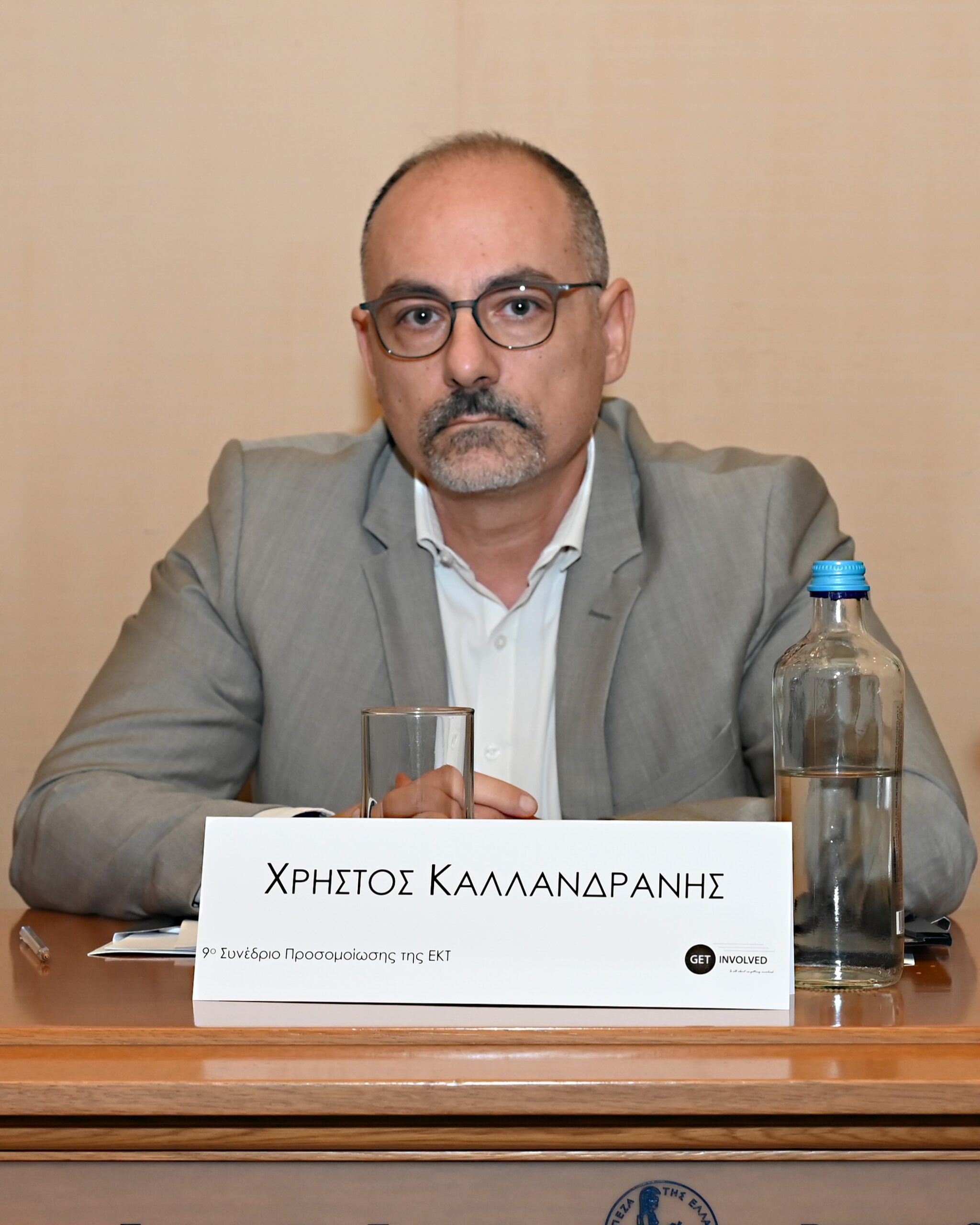
Mr. Christos Kallandranis opened the final discussion panel by presenting the digital euro as an inevitable step for the Eurozone, noting that the ECB has the adaptability framework needed to implement it. He described it as a “one-way road”, since if Europe does not develop its own digital currency, it will need to adopt an alternative solution.
The digital euro does not reinvent money; it modernizes monetary infrastructure and meets younger generations’ expectations for instant, secure, fully digital payments. Its innovative aspect lies in its institutional design, built on: state guarantee, institutional trust, universal accessibility, and interoperability across the Eurozone.
He explained that the digital euro provides public protection and continuity, unlike private solutions that involve higher risks and dependence on global platforms. He concluded by stressing that it does not compete with the banking system but strengthens competition and improves payment services.



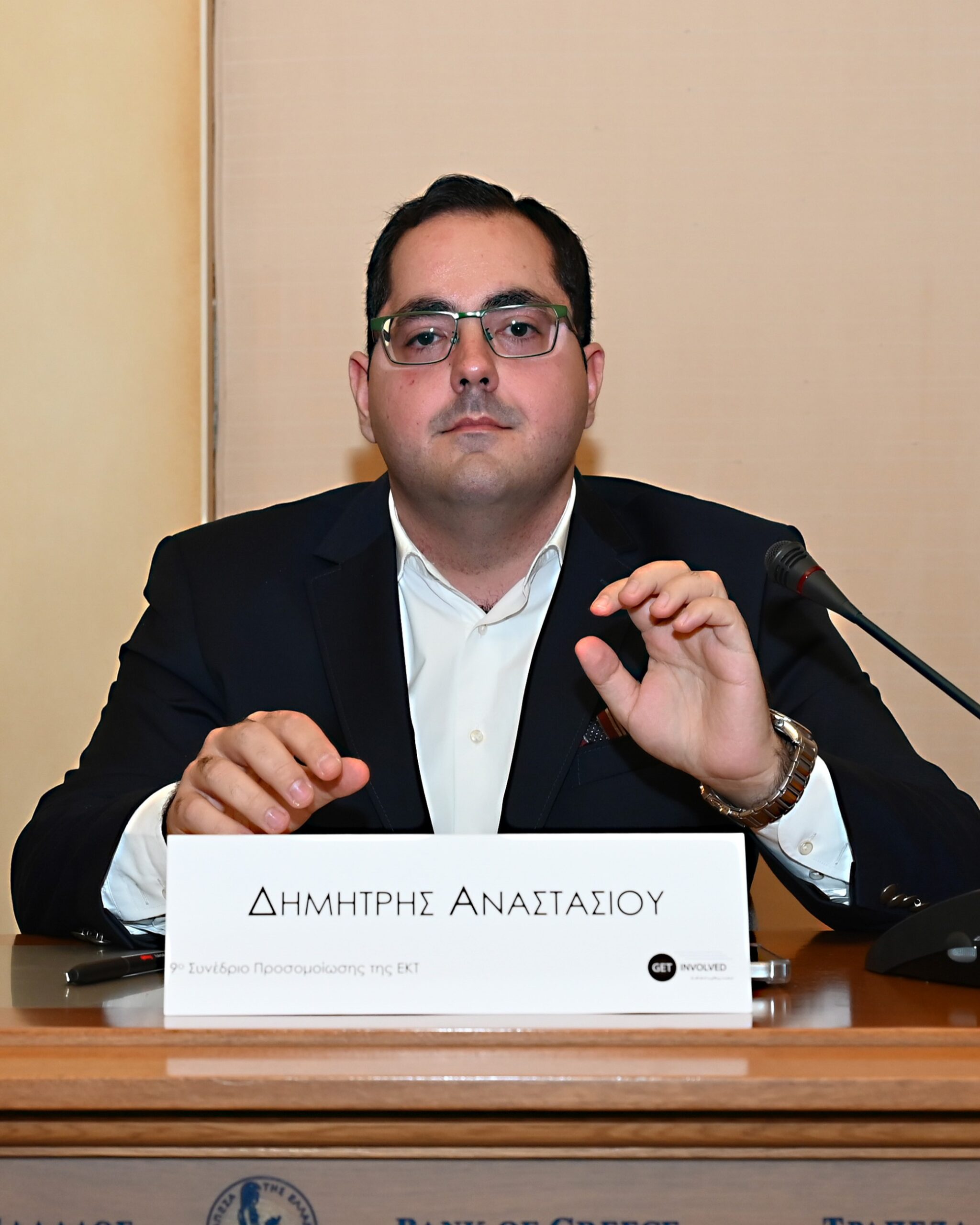
The panel concluded with Mr. Dimitris Anastasiou, who described the digital euro as public money in digital form, fully guaranteed by the ECB. He compared it to a “public PayPal,” available at all times—even during a blackout—offering the highest level of security and reliability.
Its necessity, he noted, is primarily geopolitical, as the Eurozone is heavily dependent on non-European payment platforms and lacks its own infrastructure. The digital euro strengthens Europe’s monetary sovereignty and provides a foundation for innovative private-sector services.
Mr. Anastasiou emphasized that the digital euro does not compete with commercial banks. Strict deposit thresholds will limit how much can be transferred to a Digital Euro Wallet, preserving financial stability. The digital euro’s true competitors are stablecoins and non-European payment platforms.
- Get Involved
- ECB Simulation Conference